New Images #18 – Are We Becoming More Comfortable With AI and Edited Images?

New Images #18 – Are  We Becoming More Comfortable With AI and Edited Images?

I read an interesting article recently,I’m sorry to say, but most people care about the edit, not photographic composition” (Alan Palazon, Digital Camera World, 3/8/2026).

“When I put myself in the shoes of the average person who looks at photographs online… I wonder if the scroll-stopping factor of pictures these days is how they’ve been edited rather than how well they’re composed… For me, digital technology not only revolutionized how we create photos, but also how we view them, and, subsequently, I think this has changed what the mark of a good photo is for the general public.”

I’m not sure I completely agree with this idea, but most of my photographs are edited, some substantially. I also use AI freely. And many of the tools included in the major editing programs are based in whole or in part on AI. So I thought I would explore this a little by looking at some images original and edited. (Click all images to view larger sizes, including full-screen options.)

Here are a pair of images that have been posted online before.

Fences… Original
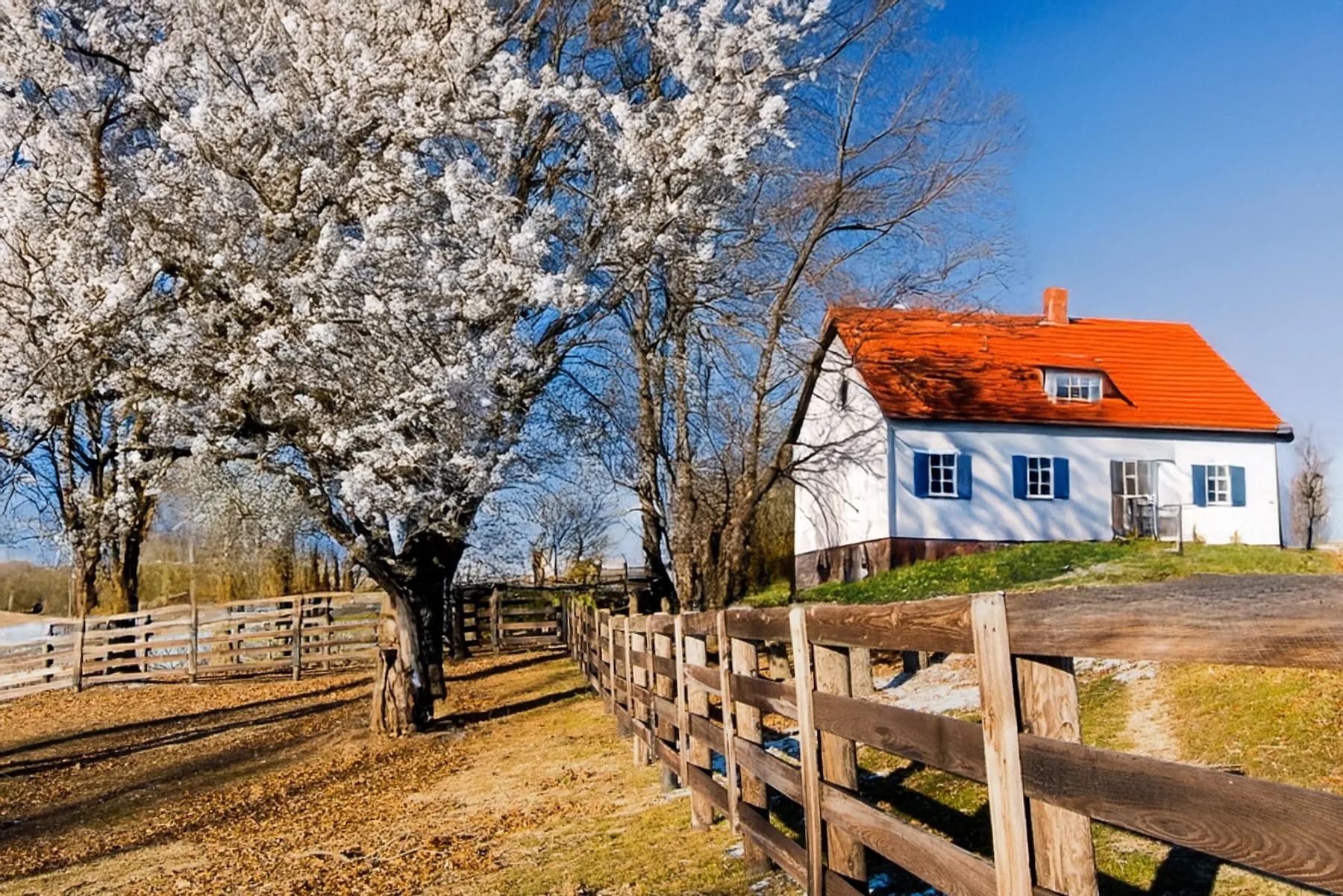
Fences… Edited with AI

The trees have been changed, though the new trees utilize existing trunks. The house is completely new, added with AI. The fences remain unchanged. So if there’s a choice, which do you prefer? Are you comfortable with using AI in the edited version? Does that improve the image? All editing was done in Adobe Photoshop.

Here’s another one, shot this week in downtown Stamford CT.

Broad Street in Early Spring
Broad Street in Early Spring, Edited

The traffic sign and a distracting part of a white car were removed with AI. The image was straightened so that the buildings would appear vertical. I was interested in capturing the early spring leavres just opening on the trees. So the overall exposure was darkened slightly, and then yellow and green saturation was increased. So is one “better” than the other? Do you prefer one over the other? Is this editing acceptable? All editing was done in Luminar Neo.

Here’s another one.

New Mexico Country Scene
New Mexico Country Scene, Edited

Hmmm, I’m not sure I like this edit. I thought the original was a little flat. In the edit, I cropped the image a little, increased saturation and contrast. All editing was done in Lumnar Neo, with little or no AI.

Finally, here are three images from earlier this year in the One Four series. The first image is the original. Los Banos is an area in western central California. It is geologically and geographically significant in that it marks the boundary between the central valley to the east and the coastal ranges to the west. (Remember you can click these images for larger views, which you should.)

Los Banos, CA – Original
Los Banos, CA – Edited 1
Los Banos, CA – Edited 2

The original image is pretty, but in my view rather flat and not too interesting. In both edited images, the sky was replaced. In the middle image, AI was used (in Photoshop) to extend the image slightly and add some elements. (Can you see it?) In both edited versions, lighting was altered; color was adjusted, as were contrast, highlights and shadows. The final image was blurred to create a more soft focus picture. So do you have a preference? Would you like the edited images if you did not know they had been so substantially edited? Have we become accustomed to, and maybe comfortable with, significantly edited pictures, including with AI? Please comment.

Watch next week for another New Images post.

5 responses to “New Images #18 – Are We Becoming More Comfortable With AI and Edited Images?”

  1. I love your edits. Are you using presets in Luminar Neo or doing your own adjustments or a combination?

    1. Hi, Egídio. I sometimes will use a preset, but more often I do my adjustments using the Edit menu. And if I do use a preset, it’s only as a ‘start.’ I will still process the image in Edit. Luminar has some useful presets for special effects (monochrome, skies), but I usually find that most of their presets are a bit heavy handed. I don’t save my own presets; I should try that. But each image is different.

  2. A fascinating exercise! For the fences image, I think the blossom trees look natural and add to the image but the house doesn’t quite ‘sit’ properly in the scene. I’m OK with this amount of AI editing but I think it needs to be declared, as the scene is so different from the reality of what you saw. But if you’re using it to remove an ugly sign or to straighten a building a little, as in your Broad Street example, I don’t have a problem with that. Indeed I do both myself from time to time and don’t see the necessity to mention it as I haven’t substantially altered reality. I really like the first of the Los Banos edits although I think the AI alterations probably do need explaining, especially the substitute sky as it’s so different from the original. I do sometimes change skies and not mention it, but only if I’m adding a touch of colour to lift one that’s burnt out but was actually blue! As for the New Mexico shot, I agree the original is too flat but the edit perhaps goes too far the other way? The crop however is definitely an improvement!

    1. Wonderful! Thank you for this comment! I’m inclined to agree completely with your analysis of each image. But I want to add two points.

      First, I tend to think of what I’m doing with images like the Los Banos series as ‘creating’ (new) images. A connection exists to the original photograph, but my aim is to do considerably more than ‘touching up’ images like the Broad Street photograph. I don’t need to explain the connection in order for the new image to stand on its own. If I explain the methods in creating the new image, it’s only because of a circumstance such as this forum where I’m commenting on methods for the benefit of informed and interested fellow artists. In this regard, these images are very similar to the altered nature pictures in the Visions of Nature series (See Challenge 393 Lucky Shot), in the sense that an original photograph is used as the basis for a significantly transformed new image.

      The second point I want to make is in the title of the post. Prior to digital photography and before the existence of sophisticated and powerful editing programs like Photoshop, Neo, (virtually all of which now incorporate AI), etc, ‘none’ of these edits – even steps as limited as those in the Broad Street photograph – would have been possible. Have we become used to this? Have these applications become so ubiqitous in their use that we’ve almost come to expect it? Has the way we can now edit photographs changed the way we ‘see’ photographs? It was a rhetorical question, but I think the answer is yes.

      1. I completely agree with what you say about creating new images. My point was really that if that’s what you’re doing I feel you should say so, as you did here, rather than suggest that the image is an accurate representation of the original scene. There’s no need to expand on what you did precisely but I do feel a comment such as ‘heavily edited’ or ‘my take on an original scene’ makes things more open. There’s a line somewhere, which I confess I find hard to pin down, between edits that enhance but don’t materially alter the scene and those that do. In the first category I put the ‘traditional’ edits of cropping, straightening, improving contrast etc, but would add some AI ones such as removing an unwanted person, maybe replacing the sky with one that is fairly true to what you saw, maybe adding a tree branch or bush to frame it better and similar. Edits that I feel cross that line and need to be declared include turning a day scene into night, adding a dramatically different sky, putting a significant additional object into the scene (your house and blossom trees are good examples) and so on. It’s not necessary to spell out what you added or how, but I think it feels more honest, to me, to mention that you have made significant changes to the scene with the help of AI and therefore consider it a new creation on your part. Does that make sense?

        As to your original question, I think many of us have become used to this BUT not everyone. I find it interesting that you ask, ‘Has the way we can now edit photographs changed the way we ‘see’ photographs?’ Most people DON’T edit photos so they won’t be thinking like you and I do. There are many people who will still take a photo at face value and that can be dangerous when AI edited images are used for questionable purposes, such as spreading fake news. I know you’re not doing that and nor are most of us who enjoy making the most of the editing tools available to us. Adding a sunset to a scene is hardly on that scale but declaring that you’ve done so is a useful way of educating people to understand that not everything they see in a photo is necessarily a reflection of what actually happened. I know that was always the case (look at those early ‘fairies at the bottom of the garden’ photos!) but it’s more important now imho 🙂

Leave a Reply

This site uses Akismet to reduce spam. Learn how your comment data is processed.