
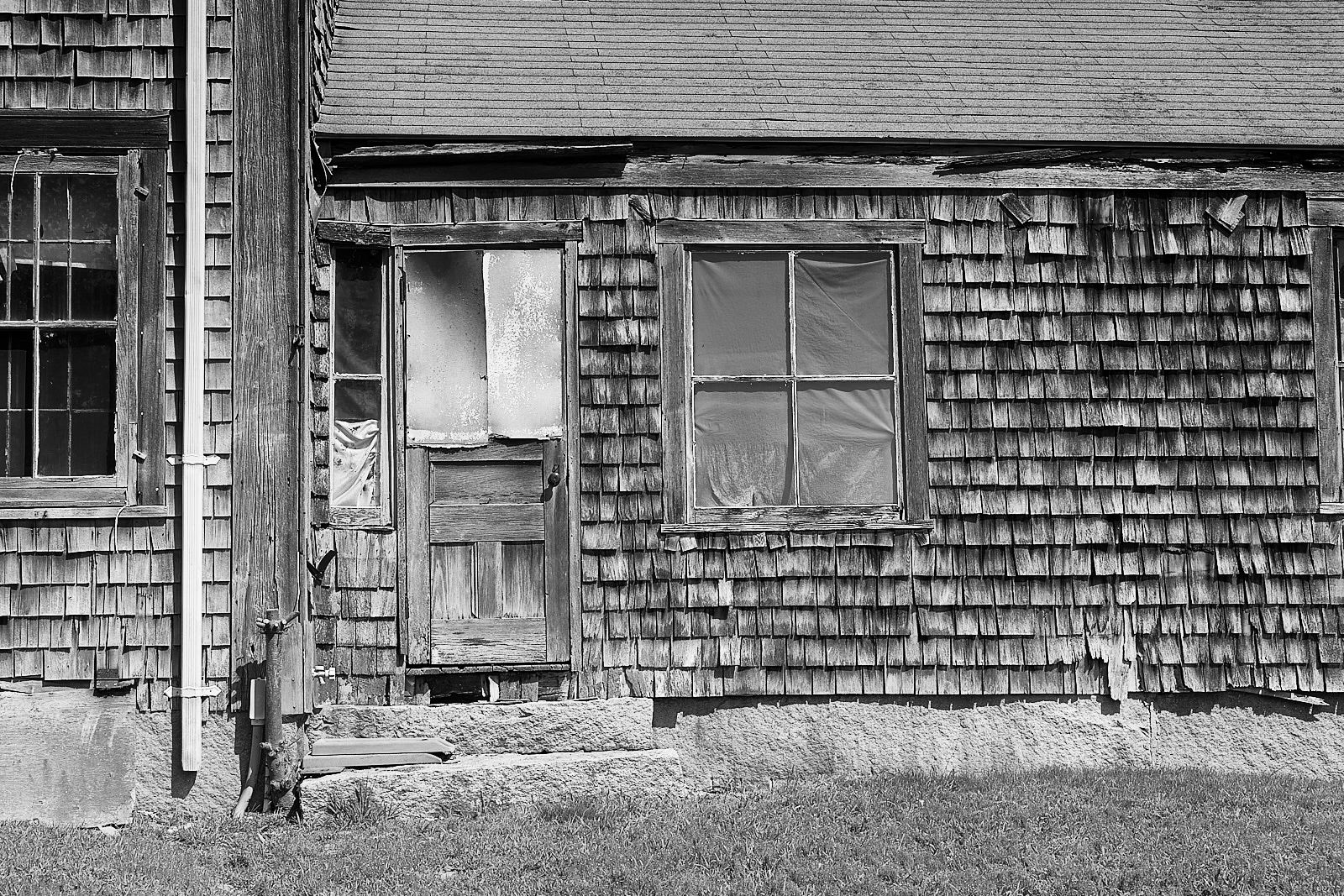
For this week’s Lens Artists theme, Ann challenges us to think about abandonment.
I often reflect on deserted locations. These sites act as powerful symbols of previous lives and neglected narratives, providing insight into the human journey through deterioration and perseverance. Abandoned places now exist as quiet observers of time’s passage and the intricate relationship between human decisions and fate.
We round a curve on a country road and come upon this old house, surprisingly maintained in good condition (also above).


Imagine the lives that once climbed these steps every day.

The abandoned dooryard has been overgrown with flowers and weeds. But that can still be pretty, no? Who says abandoned places have to be ugly?

The apple orchard is now overgrown, the trees mishapen from neglect. But someone has cut a path. Maybe the orchard is not quite so abandoned as we think.

Stone walls used to mark the boundaries of properties and fields. The walls have lasted far longer than the people who used them. Now they’re a remnant of times long gone.
Abandoned places are more than just places of decay; they are powerful symbols of the human condition. They remind us of the cycle of life and death, the enduring power of memory, and the importance of preserving our history. By engaging with these spaces, we can gain a deeper understanding of ourselves and our place in the world.

An unoccupied cabin standing alone in the high desert. I can imagine it being built by hand. Now, it’s abandoned.

This, in Adamana, Arizona, was the station for railroad visitors to the Painted Desert area in Arizona. The Atcheson, Topeka, and Santa Fe built the railroad through the area in the 1880s. Adamana was the primary stopping point for visitors before the park became a national monument in 1906. The railroad built a hotel in addition to the depot. The hotel later became one of the famous Harvey Houses. Today the abandoned station looks forlornly over the vast desert.

A window in the side of an old abandoned house.

Can trees be abandoned? Sure. This tree, and its smaller cousins nearby, once stood proudly on the riverbank, displaying fine foliage. But the water level came up and the tree stood in water so long that it died. Its branches today maintain a semblance of elegance. Do they seem to be dancing?

The ruins of homes built by the Pueblo Peoples thousands of years ago, and later by the Hopi and Navajo. They were built with a possibly surprising grasp of architecture and skill. These abandoned places have survived for centuries.
Abandoned places can evoke a sense of remembrance and reflection due to their decay and silence, prompting contemplation on the fragility of human existence and the power of memory. The haunting beauty of such places encourages us to consider the transient nature of life and the importance of preserving our past for future generations.
Thankyou, Ann, for such an interesting challenge. If you would like more information on the lens-artists challenge, go here.


Leave a ReplyCancel reply